
Why 9 to 5 Doesn’t Work for Everyone: The Power of Knowing Your Chronotype
Have you ever felt like you're just not wired for mornings — no matter how many cups of coffee you drink? Or maybe you're the one who's sharp and focused at 6 a.m., but by the afternoon you're running on empty, while your coworkers are just getting started.
The truth is, it's not about laziness, lack of discipline, or poor time management. It's about chronotypes — your internal biological rhythm that determines when you're naturally most alert, creative, and productive. Yet most workplaces and schools operate on a one-size-fits-all schedule, ignoring the fact that our brains don’t all tick the same way.
In this post, we’ll explore what chronotypes are, how they affect your performance throughout the day, and why understanding your own rhythm might be the key to working smarter, not harder.
What Is a Chronotype?
A chronotype is your body's natural preference for sleeping and waking. It affects your energy levels, mental sharpness, and performance throughout the day. Unlike simple “morning person” vs “night owl” labels, chronotypes give a more personalized look at your biological rhythm.
Most people fall into one of four chronotypes, based on Dr. Michael Breus' research. There are several approaches to chronotypes, and they can vary depending on the research or the region you live in. However, this approach is the most popular and fairly universal.
Understanding Chronotypes
Chronotypes are typically categorized into four groups.
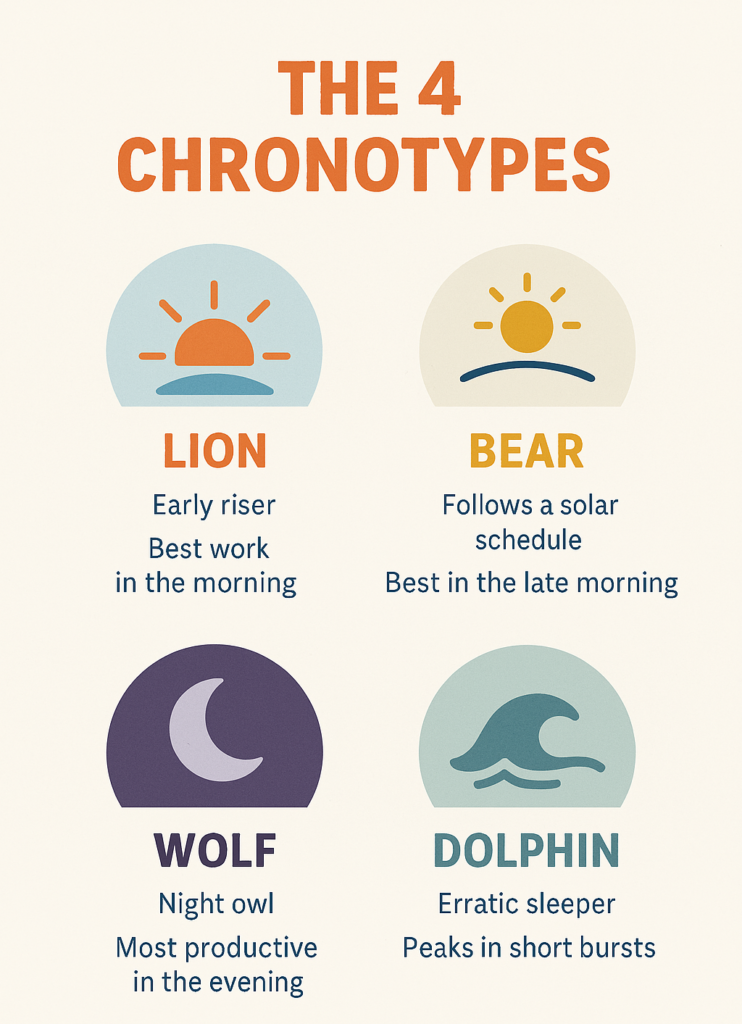
Lion - Morning Chronotype
Individuals who wake up early and are most productive during the morning hours, often experiencing a decline in energy by evening.
- Peak energy: Early morning (6:00–10:00 AM)
- Best for: Deep work, planning, decision-making
- Struggles with: Evening socializing or late-night work
- Ideal schedule: Start early, end early
Lions are the classic early birds. They thrive on structure, love to get things done before noon, and are often asleep before others start winding down.
Bear - Intermediate Chronotype
Those who follow the solar cycle, feeling alert during the day and sleepy at night, with peak productivity in the late morning to early afternoon.
- Peak energy: Mid-morning to early afternoon (9:00 AM–2:00 PM)
- Best for: General productivity, teamwork, admin
- Struggles with: Late-night creativity or early starts
- Ideal schedule: Follows a standard daytime rhythm
Bears make up the largest portion of the population. They follow the sun and perform best during traditional work hours. If you're productive from mid-morning and start fading by late afternoon — you’re probably a Bear.
Wolf - Evening Chronotype
People who prefer late nights and struggle with early mornings, finding their energy peaks in the late afternoon and evening.
- Peak energy: Late afternoon to evening (4:00–10:00 PM)
- Best for: Creative work, brainstorming, problem-solving
- Struggles with: Early meetings, morning focus
- Ideal schedule: Late starts, late finishes
Wolves are true night owls. They tend to be more introverted and creative, doing their best thinking when everyone else is done for the day.
Dolphin - Erratic Chronotype
Individuals with irregular sleep patterns, often feeling tired during the day but alert late at night.
- Peak energy: Varies — often midday
- Best for: Problem-solving in short bursts, solo work
- Struggles with: Consistent sleep, structured schedules
- Ideal schedule: Flexible and task-based
Dolphins often sleep lightly and are prone to insomnia or restlessness. They may feel tired all day but get bursts of focus at unusual times. Flexible work hours are key for this chronotype.
If you’re a Dolphin struggling with sleep consistency, a sleep tracker like the Oura Ring can help you understand your patterns better.
When Should You Work Based on Your Chronotype?
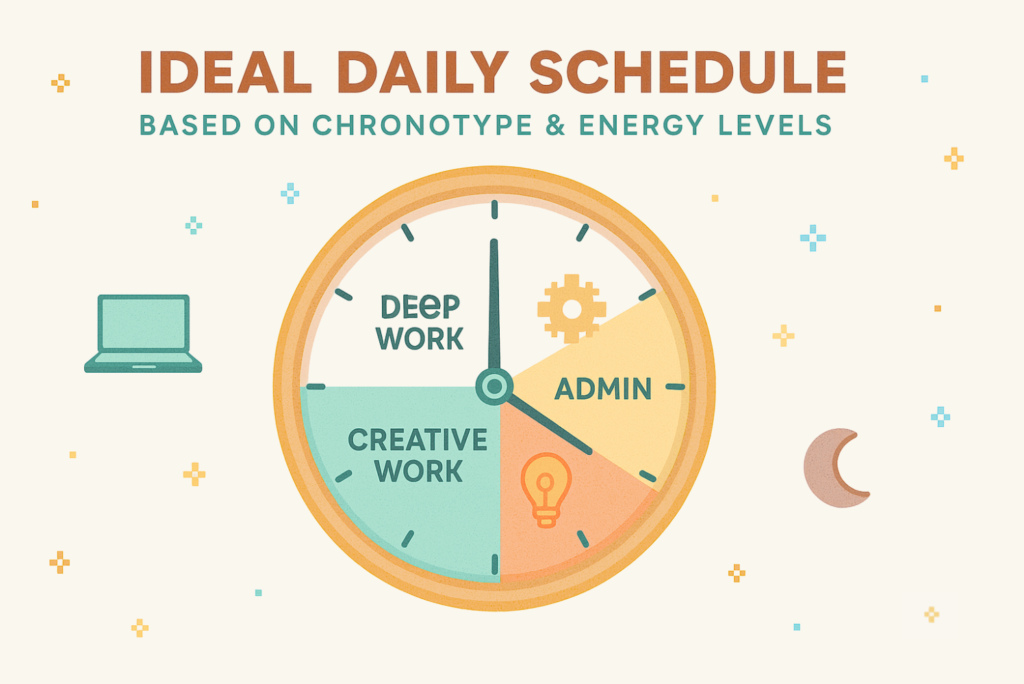
Aligning work tasks with one's chronotype can enhance productivity and cognitive performance:
- Morning Types (Lions): Best suited for tasks requiring concentration and analytical thinking in the early morning hours.
- Intermediate Types (Bears): Perform optimally in late morning to early afternoon, making this the ideal time for demanding tasks.
- Evening Types (Wolves): Experience peak performance in the late afternoon and evening, suitable for complex problem-solving and creative endeavors during these times.
- Erratic Sleepers (Dolphins): May benefit from flexible schedules that accommodate varying energy levels, focusing on demanding tasks during periods of peak alertness.
To maximize productivity, it’s crucial to align your most important tasks with your peak hours.
Here’s what works best for each chronotype:
| Chronotype | Best Time for Focused Work | Best Time for Creative Thinking | Avoid Doing... |
|---|---|---|---|
| Lion | 6–10 AM | 8–10 AM | Anything demanding after 4 PM |
| Bear | 10 AM–2 PM | 11 AM–1 PM | Deep work late in the day |
| Wolf | 4–10 PM | 6–9 PM | Morning meetings |
| Dolphin | Depends on sleep pattern | Varies, often around 10 AM or 2 PM | Early rigid schedules |
Tip: Schedule your deep work and decision-making during your peak alertness window. Leave repetitive or admin tasks for your natural low points.
When Are You the Most Creative?
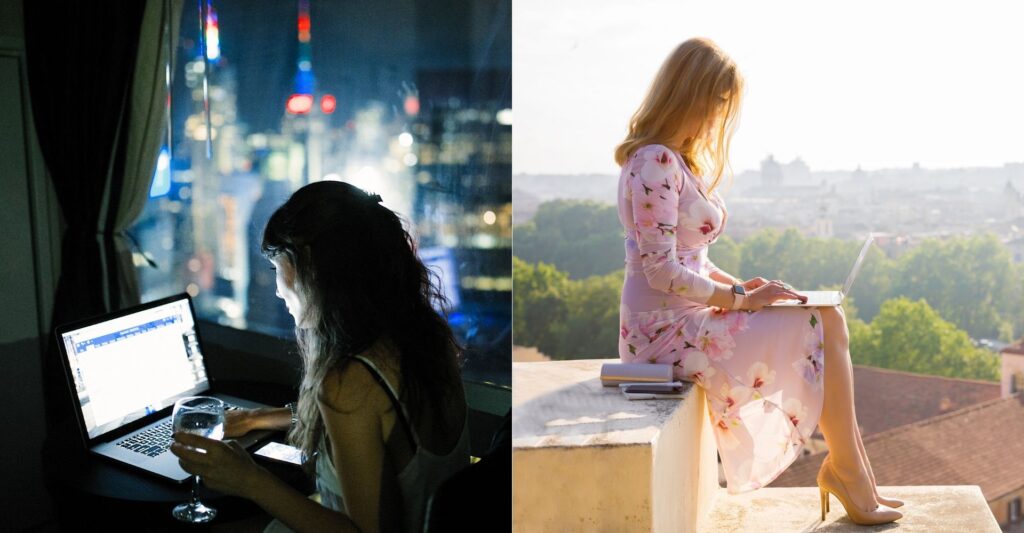
Let's look at the relationship between chronotypes and creativity. Research indicates that creativity doesn’t just strike at random — it’s linked to your chronotype too. It fluctuates with chronotype and time of day!
Evening types tend to exhibit higher creativity levels in the late afternoon and evening. While morning types often display enhanced creativity during morning hours.
- Wolves are often most creative in the evening, when their logical brain is less dominant.
- Lions do their best creative thinking earlier in the day, when their energy is highest.
- Bears may find a sweet spot around late morning or just after lunch.
- Dolphins may experience scattered but powerful bursts of insight—journaling or solo work helps capture them.
If you feel like your best ideas come at “weird” times, they probably don’t feel weird to your brain — they’re just your brain’s creative rhythm. Aligning creative tasks with the peak periods can lead to more innovative outcomes.
Align Your Schedule With Your Chronotype to Boost Productivity and Well-Being
Most people try to force themselves into generic productivity hacks and 9-to-5 routines, but your chronotype holds the real key to working smarter, not harder.
Whether you're a morning person (Lion), night owl (Wolf), somewhere in between (Bear), or have an irregular sleep cycle (Dolphin), your chronotype affects your energy levels, focus, creativity, and mental clarity.
Instead of forcing yourself into someone else’s timetable, try designing your day around your own natural rhythm. Schedule deep work when you’re most focused, creative tasks when inspiration tends to strike, and give yourself permission to rest when your energy dips.

By understanding and respecting your chronotype, you can:
- Plan deep work during your peak productivity hours
- Tackle creative projects when your mind is most flexible
- Stop blaming yourself for low energy at the "wrong" time of day
When you work with your body’s natural rhythm — not against it — you’ll not only get more done but also feel better doing it. The more aligned your daily habits are with your chronotype, the less you’ll feel like you’re fighting against yourself and the more you’ll get done without burning out.
So instead of pushing through the slump or waking up at 5 a.m. because someone told you that’s what “successful people do,” start asking: What time of day do I work best?
The next time you catch yourself wondering, Why can’t I just focus right now?, pause and ask: Am I working against my clock?
Your chronotype already knows the answers. It's time you listened.
Books That Dive Deeper into Sleep and Productivity
If you’re curious to learn more about how your brain and body function throughout the day, there are some great reads that go beyond blog posts.
- "The Power of When: Discover Your Chronotype" by Dr. Michael Breus - is practically a chronotype bible, helping you tailor your life to your internal clock
- "Why We Sleep: Unlocking the Power of Sleep and Dreams" by Matthew Walker - eye-opening and packed with research, great for a deep dive into the science of rest
- "Deep Work: Rules for Focused Success in a Distracted World" by Cal Newport - a must-read if you're trying to structure your day for maximum focus
These books can help you build habits that align with your natural energy — instead of fighting it.
Want more inspiration?
Check out this post on creativity in business and learn how to spark better ideas and thrive in remote work!
Disclaimer: This post may contain affiliate links, which means I may earn a small commission if you choose to buy through them, at no extra cost to you.
[…] about when you’re most naturally creative (because yes, timing matters), check out my post about Why 9 to 5 Doesn’t Work for Everyone: How Chronotypes Can Help You Work Smarter, Not Harder — it’ll help you figure out the best time of day for deep work, creative thinking, and when to […]
[…] Work During Your Peak Energy Time: Morning person? Night owl? Protect your best hours for deep work. Save admin tasks for the brain fog zone. Read more in this post about chronotypes and productivity. […]